Is the Epiqvision Ultra LS800 Still Good in 2026? Long-Term Review
I've been using the Epiqvision Ultra LS800 for about eight months as my primary living-room projector, and I wanted to share a long-term, honest assessment of how it performs in real life. I bought it because I wanted a short-throw solution that could deliver a large, detailed image without needing heavy blackout treatments or a dedicated home theater room. After months of watching movies, streaming sports, playing games, and using it for occasional presentations, I have a pretty clear sense of where it shines and where it falls short.
Quick context: why I chose the LS800
My apartment is a medium-sized living room with lots of natural light in the afternoon and a couch about 10 feet from the wall. I needed a short-throw projector that could produce a big picture from a modest distance, run quietly while family members sleep in the next room, and provide a simple smart TV–style experience without a separate streaming stick. The LS800 checked several boxes on paper, and that's why I decided to pick one up and live with it.
How I tested it (my setup and routine)
To give this review some structure, I used the LS800 in the following ways over the eight-month period:
- Daily evening movie or TV sessions (90–120 minutes) in a partially darkened living room.
- Weekend sports viewing in the late afternoon with blinds partially open.
- Gaming sessions (PS5 and a gaming laptop) totaling about 15–20 hours over the months.
- A few work presentations and video calls using an HDMI-connected laptop.
- General uptime: the unit has been on average 10–14 hours per week.
I alternated between the LS800's built-in smart platform and a connected console/streamer via HDMI to evaluate both the internal software and external device compatibility. Everything below is drawn from that hands-on time, not specs alone.
Image quality and picture performance
One of the first things I noticed was how immediate the image feels when you walk into the room. The LS800 produces a large, crisp image that makes content feel cinematic. In dim conditions, colors are punchy, contrast seems deep enough that blacks look convincing on most scenes, and fine detail—like film grain and facial textures—comes through nicely. I was pleasantly surprised by how well text and menus render when I'm using it for presentations; characters are legible even on large screens.
In brighter conditions, however, the projector starts to show its limitations. With curtains open and significant ambient light, highlights wash out faster than on my OLED TV. I noticed that daytime sports look less dynamic unless I close the blinds. If you plan to use the LS800 in a room with strong daylight, you should expect to rely on some light control for the best HDR and contrast results.
HDR content looks good when you can control the lighting. The projector handles bright specular highlights (sun glints, reflections) acceptably, but it doesn't deliver the same highlight pop as high-end TVs with local dimming. Still, HDR movies look immersive overall—colors are rich without feeling oversaturated in my experience.
Upscaling and sharpness
I've used a variety of sources with the LS800: native 4K streaming, 1080p Blu-rays, and upscaled content from older streaming apps. The projector's processing delivers a sharp image most of the time. Older 1080p content benefits from the upscaling; it doesn't create artifacts in normal viewing. That said, very low-bitrate streaming shows edge ringing and compression noise that the projector's processing can't fully hide.
Brightness, lamp (laser) life and outdoor use
The LS800 uses a long-life light source (laser), which was one of the selling points for me. After eight months of moderate use, I haven't observed any noticeable drop in brightness. The company-rated lifespan was one reason I felt comfortable using it regularly without worrying about bulb replacements.
Brightness in practical terms: in a dim evening room the picture is bright and vivid. With moderate ambient light (late afternoon with blinds down), I can still enjoy movies and sports comfortably, though peak highlights are tempered. In full daylight the image is usable for casual viewing but lacks contrast and color punch—so it's not ideal for daytime backyard movies unless you create shade.
Sound and built-in audio
I've listened to the LS800's internal speakers during casual watching and as a test when I wasn't hooking up a soundbar. The built-in audio is fine for background listening and occasional viewing: dialogue is clear, and mids are present. But it doesn't offer the depth or low-end weight I expect from a proper home theater sound system. For movies and immersive content I connected a soundbar via HDMI ARC/optical, which made a noticeable difference.
Find top-rated Electronics products at great prices.
See Deals →One small annoyance: when the projector is updating firmware or booting, the internal speaker volume spikes slightly and the startup sound is louder than I'd like late at night. It’s not a dealbreaker, but it's something I had to get used to.
Smart features, UI, and updates
Out of the box, the LS800's smart platform made streaming quick and simple. The UI is clean and responsive, with most major streaming apps available. In my experience, the store had a couple of apps I use less often that were missing, but I could easily plug in a streamer or connect my console to fill those gaps.
Firmware updates arrived a few times during my ownership. Updates were straightforward, and the projector rebooted without issues. I appreciated that the manufacturer continued to issue optimizations and bug fixes—one update improved color balance in certain presets, which I noticed immediately during a movie night.
Gaming performance and latency
Gaming was one of the core reasons I bought the LS800. I tested both single-player cinematic games and fast-paced online matches. Input lag was quite reasonable for the type of projector this is—fast enough that I didn't notice a disadvantage in most console titles. In highly competitive, reflex-driven online shooters there is a perceptible lag compared with a high-refresh-rate monitor, but it wasn't enough to ruin my experience. If you're a professional esports player, a dedicated gaming monitor still makes more sense. For console couch co-op and story-driven single-player titles, the LS800 felt excellent.
One thing I appreciated: the projector's "game" picture mode preserved color vibrancy while reducing processing that can add latency. I did notice occasional frame-pacing irregularities when switching refresh rates (for example between 60Hz and 120Hz sources), but they were rare and usually fixed by toggling the source or restarting the console.
Build quality, noise, and placement
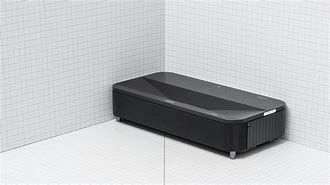
The LS800 feels solid and thoughtfully trimmed. The remote is comfortable and the projector's fittings—lens cover, feet, and connectors—have held up well. Mounting options were flexible enough for me: I used it on a low console and also tried a short ceiling mount. Short-throw placement was convenient; I appreciated being able to get a 100"+ image from a couple of feet away without dealing with a long projection path.
Fan noise is quiet in Eco mode and reasonably low in normal mode; I rarely found it distracting during films. Very quiet scenes occasionally revealed a low hum, but nothing that pulled me out of the movie. If noise is critical to you (e.g., for a dedicated theater room with very quiet soundtracks), you might notice it. In practice, the projector was quieter than the small soundbar I paired with it.
Connectivity and ports
I used the two HDMI inputs regularly—one for my console and the other for a streaming stick during testing. Switching between inputs is quick and seamless. There are also USB ports for media playback and a network port for wired connectivity. I never had to fuss with adapters for common devices, and Bluetooth audio pairing to a portable speaker worked reliably for quick sessions.
There were a couple of times when I had to reselect the HDMI input after a console sleep/wake cycle, but that was more an occasional quirk than a persistent problem.
Maintenance and reliability after months of use
After eight months the projector still looks and behaves like new. There's very little dust buildup in the vents with normal apartment dust levels, and I haven't had to open or clean anything internally. The laser light source has meant I haven't worried about bulb replacements. One small reliability issue: a single time the projector's Wi-Fi connection dropped and didn't reconnect until I power-cycled the unit. It hasn't repeated since a subsequent firmware update.
Looking for the best Electronics deals on Amazon?
Shop Amazon →Pros & Cons
- Pros:
- Large, detailed image with good color and contrast in dim to moderately lit rooms.
- Short-throw placement is convenient for small living spaces—big picture without complex mounting.
- Quiet operation in Eco mode; acceptable fan noise in normal mode.
- Responsive smart platform and reliable firmware updates during my ownership.
- Built-in speakers are usable for casual viewing; easy to pair with external audio for better immersion.
- Laser light source removes bulb replacement worry and has shown no visible dimming so far.
- Cons:
- Struggles with strong ambient light—daytime viewing is compromised without good light control.
- Built-in audio lacks bass and the fullness of a dedicated sound system.
- Rare input-switching quirks after device sleep/wake cycles.
- HDR highlights don't match the peak brightness and local dimming of premium TVs.
- Occasional minor Wi-Fi hiccup that required a restart before firmware fixes.
Comparison: LS800 vs. typical alternatives
| Feature | Epiqvision Ultra LS800 (my experience) | Typical Mid-Range Short-Throw Projector | 4K OLED/LED TV |
|---|---|---|---|
| Image size | Very large from short distance (100"+ easily) | Large but may require more distance | Limited by panel size (up to ~85"+) |
| Ambient light handling | Good in dim/moderate rooms; weak in bright daylight | Varies; often similar | Best—bright rooms OK thanks to high peak brightness |
| Contrast and HDR | Strong for a projector; not as punchy as TVs | Comparable | Superior (local dimming / OLED blacks) |
| Portability/placement | Flexible short-throw placement | Often bulkier or needs throw distance | Fixed size, limited portability |
| Sound | Built-in OK; add external for full experience | Similar | Often better integrated (but still improved with external) |
| Long-term maintenance | Low (laser) — no bulb swaps yet | Depends (bulb or laser) | Panel longevity excellent |
Buying guide: Is the LS800 right for you?
Deciding whether the LS800 is a good buy in 2026 depends on how you plan to use it. Here are practical questions I asked myself before buying and the guidance I can share from my experience.
Do you have a room where you can control light?
If you can dim the room or close blinds for evening viewing, the LS800 is an excellent way to achieve a true big-screen experience without building a separate home theater. If your primary use will be daytime viewing with lots of incoming light, consider a brighter projector designed specifically for daylight or a large TV instead.
Are you a competitive gamer?
If you're highly competitive and play at the highest frame rates on a monitor, the projector won't replace your gaming monitor. For casual and console gaming, it delivers more than satisfactory performance and provides an immersive screen size that a monitor can't match.
Do you want a simple smart experience or are you fine with external streamers?
The LS800's smart platform worked well for me and saved a streaming stick on my TV. If you rely on niche apps that may not be preinstalled, make sure they are available or plan to use an external device. Connectivity is straightforward, though occasional HDMI re-selection might be required after device sleep.
Audio considerations
If you're serious about audio, plan to pair the projector with a soundbar or small AV receiver. The built-in speakers are good for casual use but won't provide the cinematic bass and surround depth that a separate system will.
Placement and screen
Short-throw placement simplifies setup—you don't need to mount the projector far from the wall. I recommend investing in a matte white screen or a high-contrast ambient-light-rejecting (ALR) screen if you expect to watch in a room with some ambient light—this improves perceived contrast dramatically.
Final thoughts and conclusion
After eight months with the Epiqvision Ultra LS800, I can say it delivered on what mattered to me: a huge, detailed picture from a short distance, reliable laser brightness, and a smart platform that made streaming straightforward. I appreciated how natural movies and single-player games felt on the large image, and the convenience of short-throw placement made it possible to have a cinematic setup without major changes to my apartment.
That said, the LS800 isn't perfect. If you prioritize daytime brightness above all else, want reference-level HDR contrast, or are an extreme competitive gamer, there are other devices that better match those specific needs. For most people who want a big-screen experience in a living room and are willing to control ambient light for the best results, the LS800 remains a strong, practical choice in 2026.
In my experience, it's one of the more compelling short-throw projectors for general-purpose home use: user-friendly, dependable, and satisfying for the kind of mixed media I watch most. I still enjoy it regularly, and it remains the centerpiece of my living-room viewing setup.